
Understanding Fully Weighted, Semi-Weighted & Unweighted Keys
- Popuglobal
- Knowledge base
Many beginners tend to confuse these concepts. Fully weighted, semi-weighted and unweighted keys all belong to the electronic keyboard category. Traditional acoustic pianos adopt purely mechanical structures and naturally deliver genuine hammer-action touch. To accommodate varied playing habits, efficiency, and portability needs, electronic keyboards apply modern technologies to create these different levels of key resistance.
Keyboard touch is the most critical factor to consider when purchasing a digital piano. Fully weighted keyboards offer traditional pianists a touch and tonal response closest to that of an acoustic piano, while semi-weighted and unweighted keyboards cater to users with different needs. When selecting a digital piano, in addition to keyboard touch, we should also consider factors such as the number of keys, brand reputation, and connectivity with external devices. Digital piano keyboards on the market are categorized into three types based on touch: fully weighted, semi-weighted, and unweighted.
Different types of digital pianos cater to different user groups. There’s no need to chase the most expensive model,the best choice is the one that meets your current needs.
- Unweighted Keys: Predominantly found in entry-level digital pianos and synthesizers, they are known for being lightweight and responsive.
- Semi-weighted keys: Falling between the feel of a synthesizer and a piano, they offer a balance of key response and playing flexibility.
- Fully weighted keys: Equipped with a progressive resistance mechanism, they produce richer tonal nuances and help players develop muscle memory.
Different types of digital pianos cater to different user groups. There’s no need to chase the most expensive model,the best choice is the one that meets your current needs.
Contents
Key Takeaways
- Unweighted keys adopt a spring rebound structure with no extra weight added, making them the lightest and most responsive option among the three types.
- Semi-weighted keys are fitted with metal weights or reinforced springs, delivering a touch feel between unweighted and fully weighted keys.
- Fully weighted keys are equipped with genuine hammers and counterweights to replicate the hammer action of acoustic pianos, ideal for players with clear learning goals.
- The core purchasing criterion lies in practical demands rather than budget. It is a more rational choice to pick a digital piano that fits your current needs and consider upgrading later as your proficiency improves.
What Are Unweighted Piano Keys
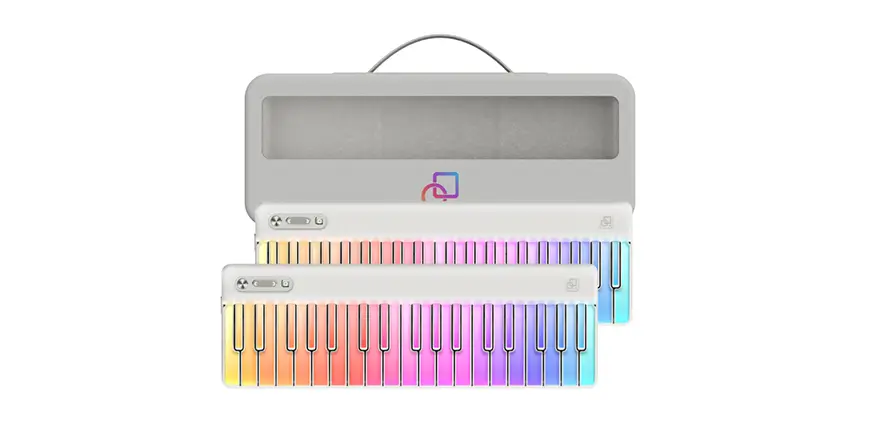
Unweighted keyboards are the simplest type of keyboard on the digital piano market. Their core design goals are light touch and tonal versatility. They lack weighted keys and a hammer action mechanism, relying instead on springs for rebound. The spring’s rebound speed is faster than that of a hammer action, allowing the keys to return to their ready-to-play state in a very short time. For players accustomed to acoustic pianos, this extremely light touch may initially feel lacking in feedback, but after a short period of adjustment, most are able to utilize its rapid response to execute dense sequences of notes that would be difficult to achieve on a weighted keyboard.
Who Should Buy an Unweighted Keyboard?
The key features of non-weighted keyboards are their portability and accessibility. For beginners new to the piano, especially children under seven, the lightweight keys eliminate physical barriers, allowing children to focus their attention on note recognition and developing a basic sense of rhythm. If you are purchasing a weighted-key keyboard for a beginner and plan to transition to an acoustic piano in the future, we recommend prioritizing models with touch sensitivity. Touch sensitivity preserves dynamic response information during performance.
Another major advantage of unweighted keyboards is their connectivity. Most unweighted digital pianos support connecting to external sound libraries via USB or MIDI interfaces, allowing you to utilize multiple instrument sounds for music creation. Combined with virtual instrument plugins on a computer, unweighted keyboards can freely combine and switch between various sounds such as piano, organ, strings, and synthesizer leads on a single device.
| Unweighted Keyboard Model | Key Count | Velocity Sensitivity | Reference Price | Target Audience |
|---|---|---|---|---|
| Yamaha PSR-E383 | 61 | Yes | ~$199 | Beginners |
| PartyKeys | 36 | Yes | ~$219 | Everyone |
| Arturia KeyLab Essential 49 mk3 | 49 | Yes | ~$299 | Creators |
| Akai MPK Mini Play MK3 | 25 | Yes | ~$129 | Creators |
| Casio CT-S500 | 61 | Yes | ~$449 | Creators |
*Prices for reference only. Actual retail prices may vary.
What Are Semi-Weighted Piano Keys
(Image Source: Native Instruments)
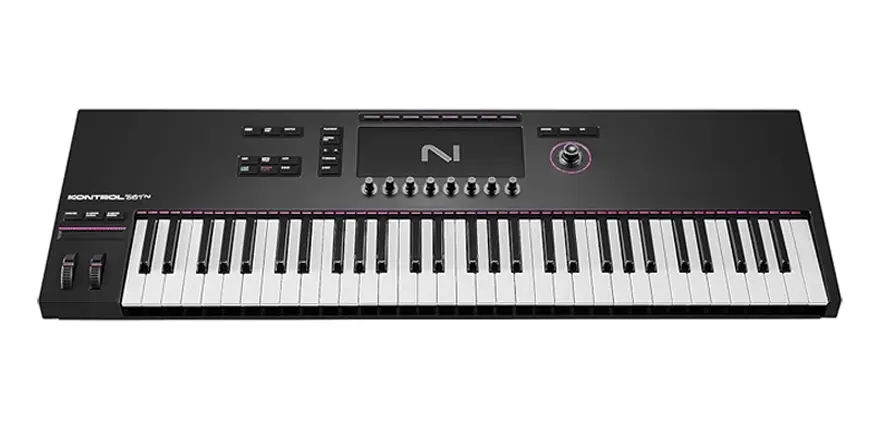
A semi-weighted keyboard is a lower-end version of a fully weighted hammer-action keyboard. Semi-weighted keyboards have built-in metal weights, making the keys feel more responsive when pressed. For players accustomed to acoustic grand pianos, the feel of a semi-weighted keyboard may still be light.
Currently, there is no unified industry standard for the concept of semi-weighted keyboards among different brands. When purchasing, if possible, it is best to try playing the instrument yourself to experience the actual feel.
Who should buy a semi-weighted keyboard?
Semi-weighted keyboards combine the convenience of unweighted keyboards with the tactile feedback of fully weighted keyboards. They enrich synthesizer arpeggios and organ glissandos by frequently bridging classical and modern styles. When purchasing, pay close attention to whether the keys have aftertouch, as this significantly enhances the expressiveness of synthesizer tones.
| Semi-Weighted Keyboard Model | Key Count | Aftertouch | Reference Price | Target Audience |
|---|---|---|---|---|
| Arturia KeyLab Essential 88 MK3 | 88 | No | ~$385 | Everyone |
| Native Instruments Komplete Kontrol S61 MK3 | 61 | Yes | ~$839 | Creators |
| M-Audio Oxygen Pro 61 | 61 | Yes | ~$349 | Creators |
| Roland Fantom-07 | 76 | No | ~$2099 | Creators |
| Nektar Impact LX88+ | 88 | No | ~$1332 | Everyone |
*Prices for reference only. Actual retail prices may vary.
Tip: For those transitioning from an unweighted entry-level keyboard to a fully weighted digital piano, a semi-weighted piano is a reasonable choice.
What are Fully Weighted Piano Keys?
(Image Source: Yamaha)
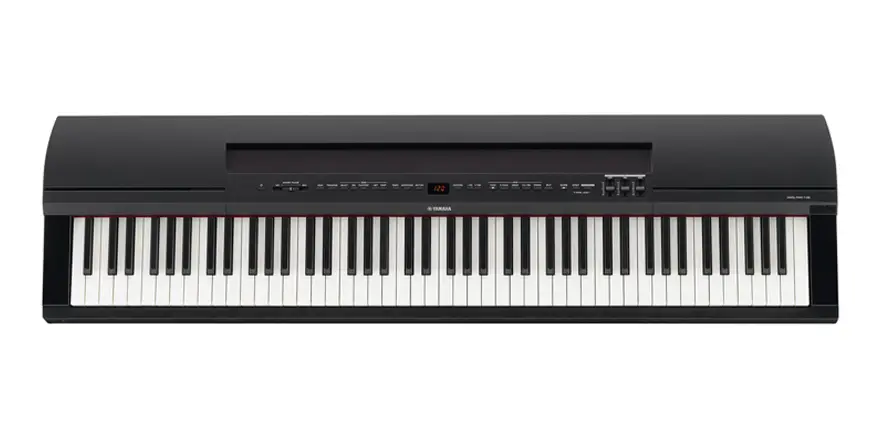
Fully weighted hammer-action keyboards are the most structurally complex type of digital piano and offer the playing feel closest to that of an acoustic piano. Fully weighted keyboards incorporate physical hammers, counterweights, and multi-point pivot mechanisms. Pressing a key actually involves lifting a small hammer inside the instrument, and the resistance felt comes from the physical movement of these real components. Within fully weighted keyboards, the progressive hammer action mechanism is a key technical feature. This design ensures that the resistance of the bass keys is greater than that of the treble keys, replicating the natural weight difference found in acoustic grand pianos due to the larger size of the bass hammers.
High-end fully weighted keyboards also feature an escapement mechanism simulation. On an acoustic piano, the escape point is the instant the hammer leaves the key mechanism before striking the string. Experienced pianists use this subtle change in touch to control the dynamics of soft passages. This feature helps establish a touch feedback consistent with an acoustic piano.
Who is a suitable buyer for a fully weighted digital piano?
The weight of a fully weighted digital piano is an objective factor that cannot be ignored. An 88-key fully weighted digital piano typically weighs 25 to 60 pounds, while a semi-weighted stage piano with the same number of keys weighs about 15 to 25 pounds. If the instrument is primarily kept at home, the weight will no longer be a concern after installation. If you frequently need to carry your instrument for performances, a semi-weighted keyboard or a lighter-weighted stage piano is a more practical choice.
- Students with clear piano learning goals and plans to take graded exams.
- Performers who frequently perform on acoustic pianos.
- Advanced enthusiasts who have high requirements for tonal expressiveness.
| Fully-Weighted Keyboard Model | Key Count | Hammer Action Mechanism | Escapement Simulation | Reference Price |
|---|---|---|---|---|
| Yamaha P-225 | 88 | Graded Hammer Compact (GHC) | No | ~$749 |
| Roland FP-30X | 88 | PHA-4 Standard | Yes | ~$699 |
| Kawai ES920 | 88 | Responsive Hammer III | Yes | ~$1599 |
| Yamaha Clavinova CLP-845 | 88 | GrandTouch-S | Yes | ~$2099 |
| Kawai CA-501 | 88 | Grand Feel Compact | Yes | ~$4099 |
*Prices for reference only. Actual retail prices may vary.
Comparing Three Keyboard Touches
Comparing the three keyboard touches side-by-side provides a more intuitive view of their differences in the core dimensions affecting the playing experience. The table below summarizes them from the perspectives of price range, target audience, and functional focus:
| Comparison Dimension | Non-weighted | Semi-weighted | Fully Weighted / Hammer Action |
|---|---|---|---|
| Price Range (88-Key) | ~$150 to $400 | ~$250 to $1700 | ~$500 to $8000+ |
| Target Audience | Electronic music creators | Hybrid live performers | Piano students of all levels |
| Core Tone Focus | Emphasizes integration of synthetic electronic tones and virtual instrument plugins. | Balances diversified built-in sounds with external software connectivity. | Focuses highly on recreating authentic acoustic piano tones. |
| Portability | Highly lightweight | Moderate | Heavy body |
| Dynamic Expression | Limited | Medium | Wide |
| Beginner Friendliness | Extremely high | Relatively high | Moderate |
Unweighted keyboards cover both music education and electronic composition scenarios with the lowest entry cost and the most convenient user experience. Semi-weighted keyboards strike a balance between cost and feel, making them the optimal solution for mixed use in multiple scenarios. Fully weighted keyboards have an irreplaceable advantage in dynamic performance, but the price and weight also increase accordingly.
The most reliable way to judge when purchasing is to try it out in person. If you cannot go to a physical store to experience it, it is recommended to choose a retailer that supports 30-day no-reason returns and exchanges, and use two weeks of daily practice to test whether the key feels suitable for you.
How to Choose a Keyboard Type Based on Your Needs
Beginners: Piano teachers generally recommend that beginners choose a fully weighted keyboard if their budget allows. Starting with a fully weighted keyboard allows your fingers to adapt to the key resistance in about two to three weeks, after which you can build a fingering foundation that matches formal piano instruction.
If your budget is limited or you are unsure about your long-term commitment, you can purchase an unweighted or semi-weighted keyboard as a transition. If you continue practicing, you can upgrade to a semi-weighted or fully weighted keyboard.
Advanced Players: For advanced users who have already developed hand-eye coordination, the demands of advanced pieces on dynamic levels and touch control exceed the physical limits of an unweighted keyboard. A semi-weighted keyboard provides a significant improvement in touch, while a fully weighted keyboard paves the way for further systematic learning.
Performance Requirements: For pianists who perform frequently, the choice of keyboard should be based on the specific performance context. For practice and recording in a fixed location, high-end, fully weighted keyboards are the preferred choice. Users who need to transport their equipment for performances on the road may want to consider semi-weighted stage keyboards or lightweight, non-weighted models.
Tip: When purchasing a digital piano, the core consideration is whether the piano meets your actual needs at this stage.
FAQ
Can I systematically learn to play the piano on a semi-weighted keyboard?
You can complete the beginner stage, including note recognition, basic rhythm training, and hand coordination.
Are hammer-action and weighted-action mechanisms the same thing?
Weighted-action is a broader category that refers to all keyboards with added mass or resistance on the keys, including semi-weighted designs.
Is an 88-key keyboard necessary?
Most beginner and intermediate pieces can be played in their entirety on a 61-key keyboard. However, works from the Classical and Romantic periods require the full 88-key range.
Can a fully weighted keyboard be used to play synthesizer and organ sounds?
Technically, a fully weighted keyboard can trigger synthesizer and organ sounds just fine.
How long does it take to transition from unweighted keys to fully weighted keys?
With daily practice, most players can adapt within two to four weeks.